

It's challenging enough running a small business without making your money go down the drain. Most owners do some marketing, service, or product quality work but usually never contemplate praying. That becomes expensive. One product may be selling well, but the price is not working well because it does not make good profits.
Smart pricing is both key to influencing your customer's perception of the value of your product and essential to maintaining an adequate margin along with steady growth.
In this blog, you'll discover how to price strategically, top pricing errors to avoid, pricing models, and easy revenue boosts that won't impact customer confidence.
Strong pricing strategies help businesses balance customer demand with profit. They are not fixed forever. Markets shift. Costs change. These days, customers do a lot more comparing before they buy.
The smartest companies don’t just copy their competitors’ prices—they set pricing strategies that line up with their own goals. Some go after fast growth, some want to protect their margins, and others focus on building loyal customers in the long run.
A lot of business owners wonder, What exactly is a pricing strategy? It’s pretty simple: it’s the way you decide what your product or service should cost.
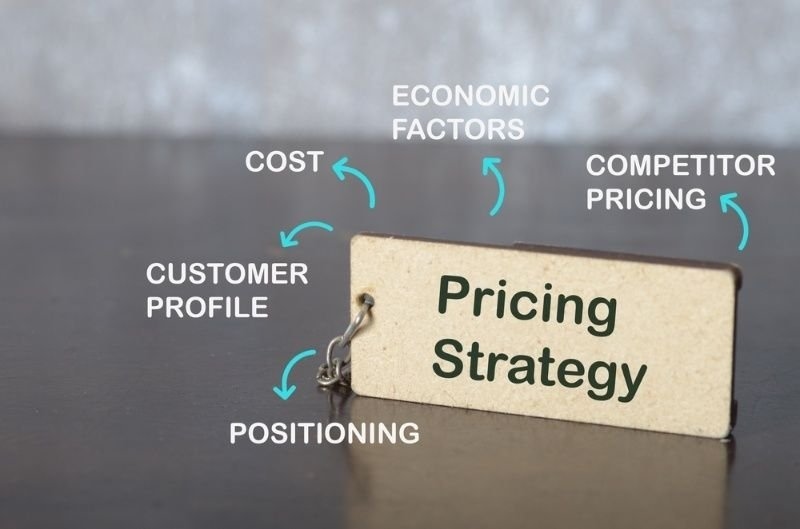
Knowing what makes a solid pricing strategy keeps businesses from setting prices on a whim or making emotional decisions. Instead of guessing, companies evaluate customer value, operating costs, competitors, plus demand.
Knowing what is pricing strategy also makes future price adjustments easier because every decision follows a clear framework.
There isn't one perfect model. Different types of pricing strategies work for different businesses.
There are a few types:
| Strategy | Best For | Main Advantage | Risk |
|---|---|---|---|
| Value-based pricing | Premium products | Higher margins | Requires strong brand value |
| Cost plus pricing | Manufacturing | Easy calculations | Ignores customer demand |
| Competitive pricing | Crowded markets | Easy market positioning | Price wars |
| Penetration pricing | New businesses | Fast customer growth | Lower early profits |
Whatever strategy you choose should support your actual goals—not just follow what the rest of the industry does.
Don't Miss: Small Business Security System: Smart Protection Tips
Many businesses lose profit because of simple pricing mistakes, not weak products. Some pricing mistakes happen quietly. Others become obvious only after margins shrink.
It’s easy to trip up. Common mistakes? Underpricing just to attract customers, copying competitors without doing your homework, ignoring rising costs, or never revisiting your pricing post-launch.
Those mistakes don’t tank your business overnight, but over time, they eat into your profits. People might keep buying, but you end up earning less.
Don’t wait until sales slump. Pencil in regular pricing checkups.
A quick monthly review should cover:
It’s almost always easier to avoid pricing mistakes than to fix them later.
If you sell something that’s easy to compare with competitors, competitive pricing can help. But racing to the bottom and always matching the lowest price isn’t the answer.
Competitive pricing makes sense when you’re surrounded by lookalike products—like in retail, e-commerce, or subscription services. But don’t focus on being the cheapest. That’s not your real goal. It’s to offer fair value and still protect your profits.
Both competitive and value-based pricing can boost sales and profits. The right approach depends on your industry, your customers, and where you want your business to go.
| Competitive Pricing Strategy | Value-Based Pricing Strategy |
|---|---|
| Focuses on competitor prices | Focuses on customer value |
| Easier to implement | Requires customer research |
| Works in crowded markets | Works for premium brands |
| Lower differentiation | Stronger profit potential |
This comparison shows why businesses shouldn't automatically choose one model forever.
A value-based pricing strategy prices products according to perceived customer value rather than production cost. That difference matters.
Customers often pay more when they believe the outcome justifies the price. Brands selling luxury goods, software companies, consultants, or healthcare providers usually win with value-based pricing—those customers care a lot more about results than sticker price.
Trust is key here. Without it, value-based pricing falls apart.
Here’s a quick example: Two accountants provide nearly identical tax services. One charges $150 because competitors do. Another charges $280 while including year-round support, plus business plan and sessions.
The second business isn't selling paperwork. It's selling confidence. That simple pricing strategy example shows how perceived value changes willingness to pay.
A cost plus pricing strategy starts with production costs before adding a profit margin. Simple. Predictable.
Manufacturers and wholesalers usually lean toward cost plus pricing, because it keeps calculations steady and helps shield profits as material costs rise.
Even then, it’s risky to rely on just one pricing strategy forever. Mixing it up or reviewing your approach keeps your business strong.
Another pricing strategy example helps explain it. Let’s say your product costs $40 to make. Add a 50% markup, and you’re selling it for $60. This pricing strategy example is straightforward, yet it ignores customer demand.
That limitation explains why many businesses combine multiple pricing strategies instead of depending on one method.
Learning how to raise prices without losing customers is one of the hardest business challenges. Fortunately, it can be managed.
Businesses succeed when they explain improved quality, better service, or rising operating costs before changing prices. Customers dislike surprises more than reasonable increases.
That is one of the easiest ways to raise prices without losing customers.
Small adjustments usually create less resistance than a large increase. Businesses asking how to raise prices without losing customers should notify loyal customers early, provide clear reasons, plus continue delivering excellent service after the change.
Must Read: Small Business Financial KPIs Every Owner Must Track to Grow
Good pricing strategies grow with the business. Markets change. Customer expectations move. Prices don't keep going the same way. Firms that estimate price strategies regularly are apt to make better price choices as they do not depend on assumptions.
Prevent common pricing errors, learn about various pricing approaches, consider using a competitive pricing structure when customer demand requires it, use a value-based pricing structure when it offers the greatest customer value, or use a cost plus pricing strategy when cost is most important.
For most, it’s smart to review pricing every three to six months. Competitors shift, customer expectations change, and markets can move fast. Checking in regularly helps you stay sharp—and you won’t feel forced into constant, stressful price changes. Your margins stay healthier, too.
No way. Each product needs its own plan. Premium items are perfect for value-based pricing. They’re usually better off this way than if you try to lump them in with basic commodity products competing mostly on price.
Your customers catch on—they wait for sales, and it gets tough to sell anything at full price. Promotions have their place, but keep them short and sweet. You don’t want “everything’s always on sale” to become your reputation.
Focus on gross margin, customer retention, conversion rate, and average order value, and don’t forget what your competitors are charging. Looking at these together gives you a much clearer picture than just watching sales numbers alone.
This content was created by AI